The Creature VFX work for Pablo e Luizão involved developing digital animals for live-action integration. This case study presents two creatures from the production: a detailed ostrich breakdown and a macaw developed through a similar asset, rigging, grooming and rendering pipeline.
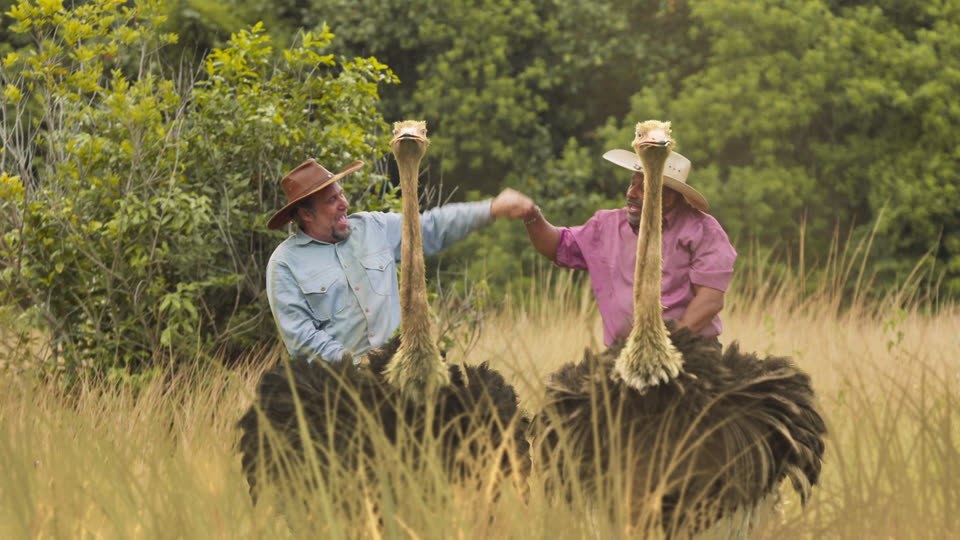
During filming, stunt performers supported the actors. In the final shots, the performers were replaced with two fully digital ostriches.
The effect
For the series Pablo e Luizão, produced by Globoplay, the team needed to transform a scene filmed in an open field into a sequence featuring characters riding ostriches. My work focused on asset development and optimization, building the animation-ready rig, feather grooming, dynamics and rendering. I handed off an optimized model and rig to the animator; the ostrich animation was not done by me.
The production had a small team and multiple digital animals in development. The challenge was not only visual quality, but building an animation-ready asset with reliable performance and enough flexibility for changes during production.
EPISODE SHOTS • UPDATED VIDEO WITH CORRECTED AUDIO02 / FINAL SHOTS
FROM SET TO SCREEN.
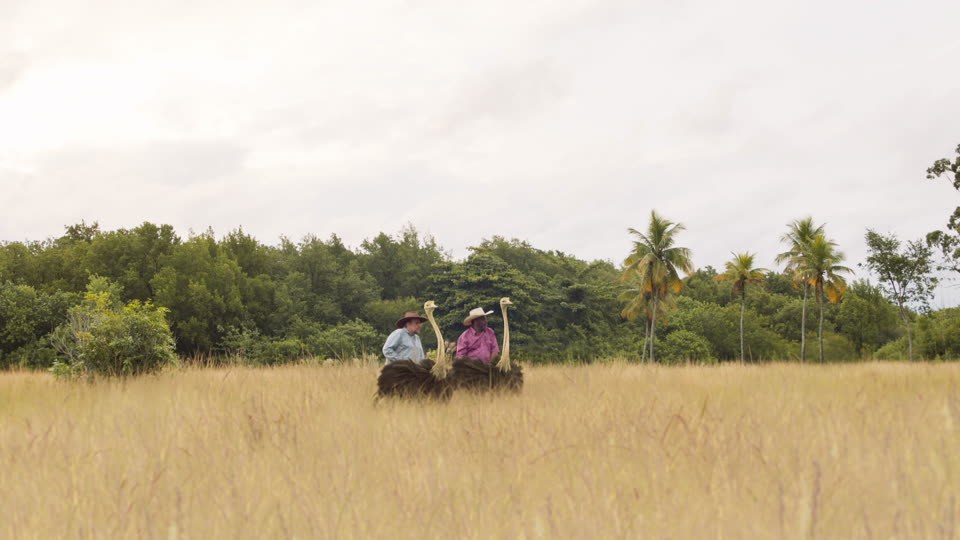
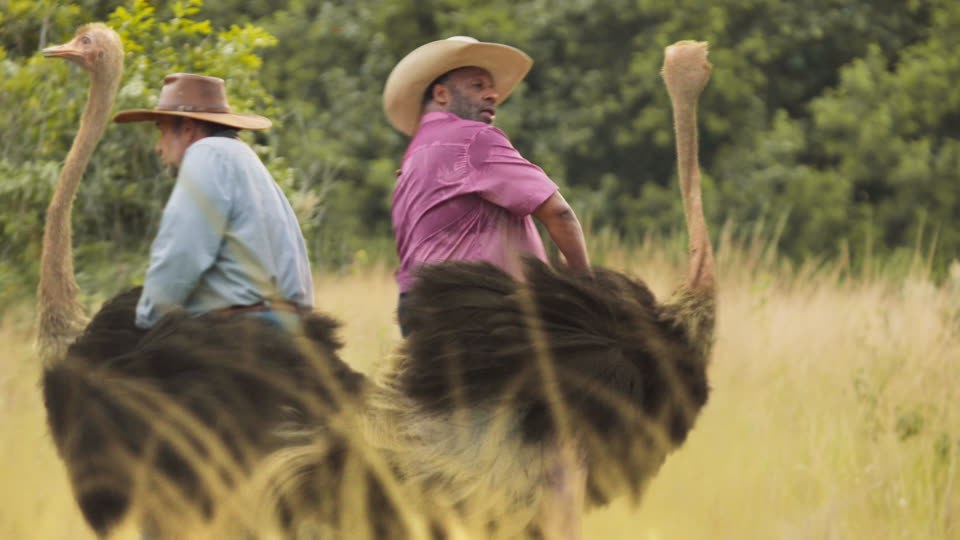
Shot featuring both digital ostriches in the foregroundWide shot of the outdoor environmentCloser shot of the ostriches integrated into live-action footage
03 / MAKING OF
BUILDING THE CREATURE.
The purchased model served as a starting point, but required substantial reconstruction and a new feather system to achieve the desired result.
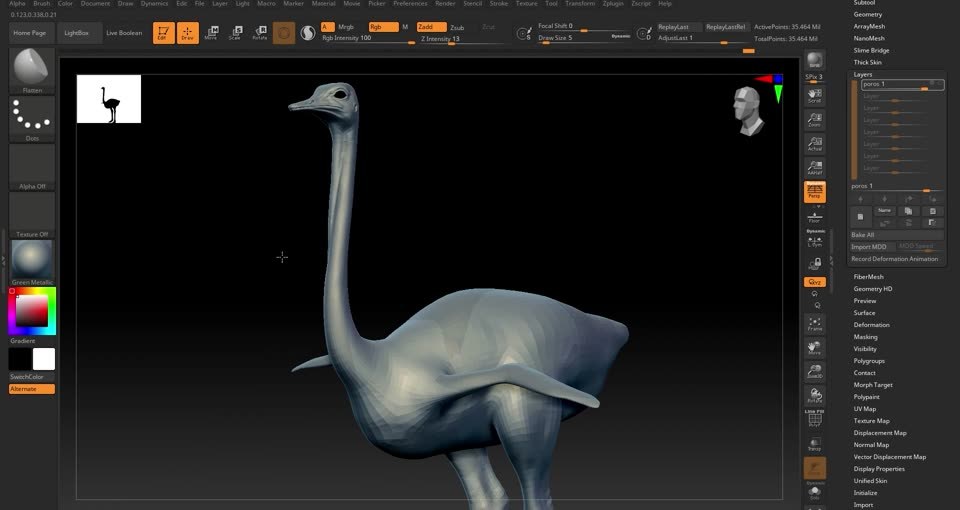
The purchased asset used feather cards and had a rig that was not suitable for production. Parts of the body were retained while essential elements were rebuilt. ZBrush was used to refine sculpting and surface details, including work that could be reused in other projects.
Sculpting detail in ZBrush02 / RIGGING
Control and flexibility.
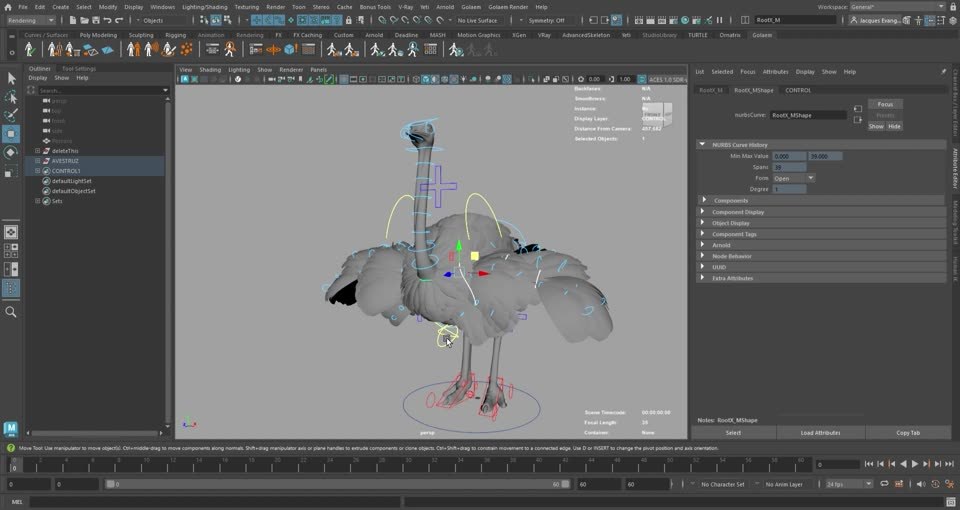
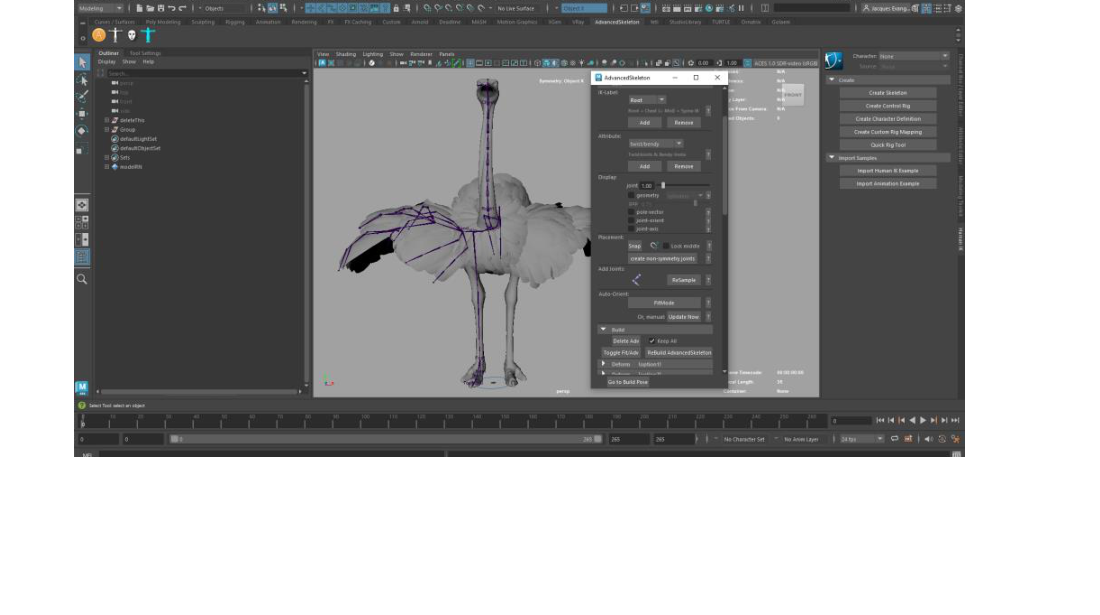
I built and optimized the ostrich rig in Maya using Advanced Skeleton, preparing a lighter, animation-ready model and control setup for handoff to the animator. I did not animate the ostrich. The original feather cards were also useful as proxies during production.
Rig structure and controls in Maya03 / FEATHER GROOM
The biggest challenge: feathers.
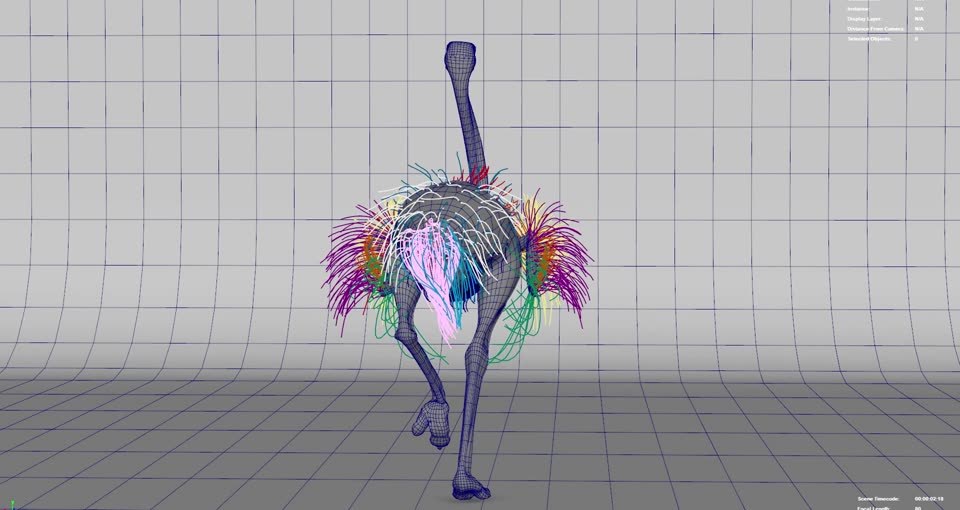
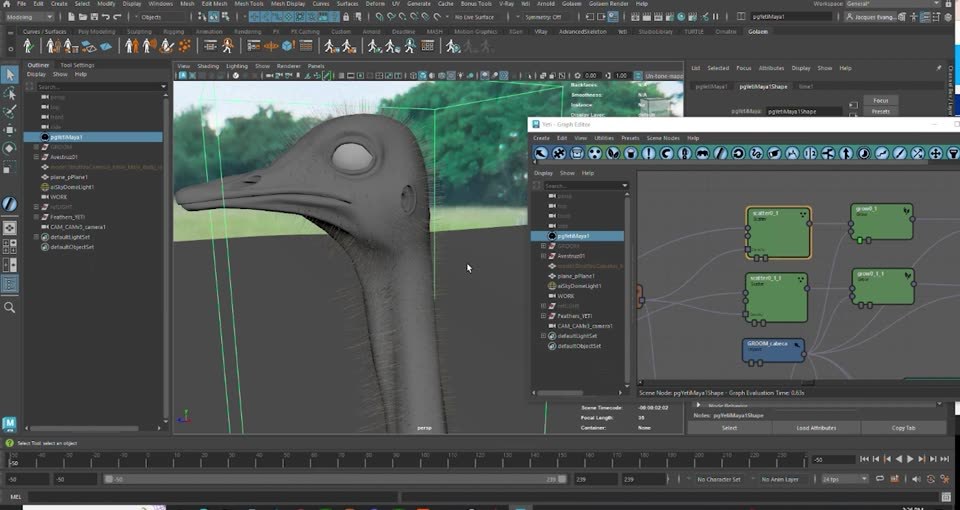
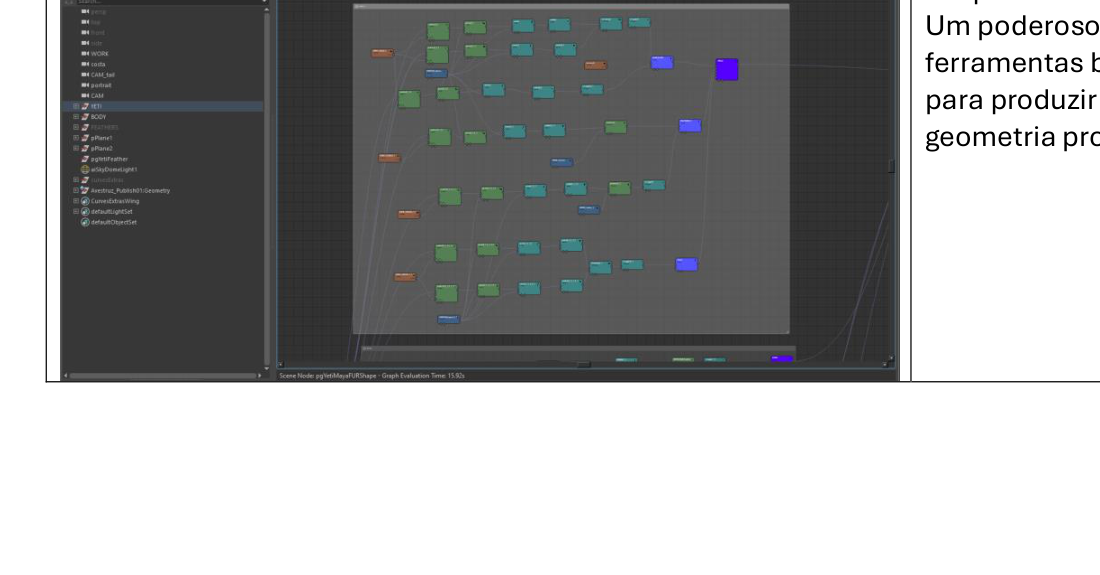
Instead of using feather cards in the final render, I created a procedural feather system in Yeti 4.2. The groom was divided into regions — head, wings, body, tail and other areas — with guides, density maps and attributes controlling orientation and variation.
Feather guides and procedural grooming04 / DYNAMICS & CACHING
Motion without instability.
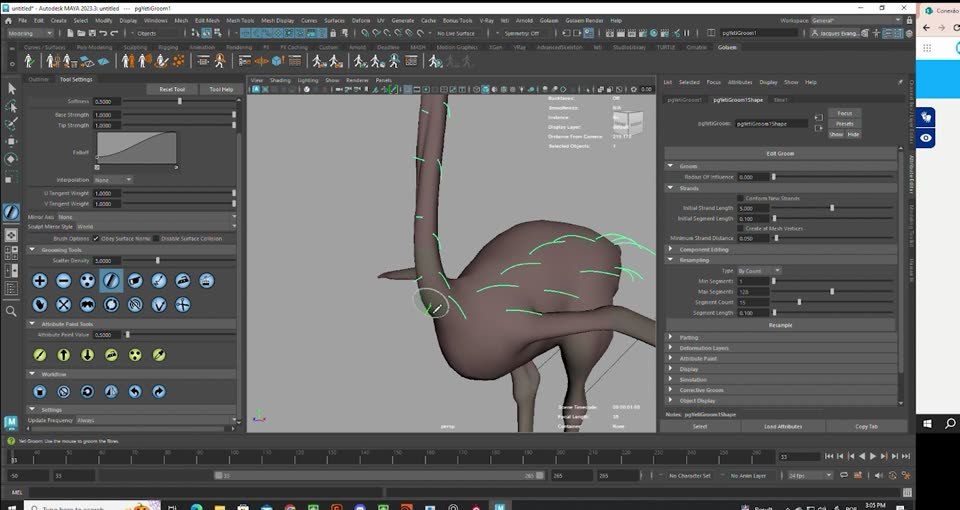
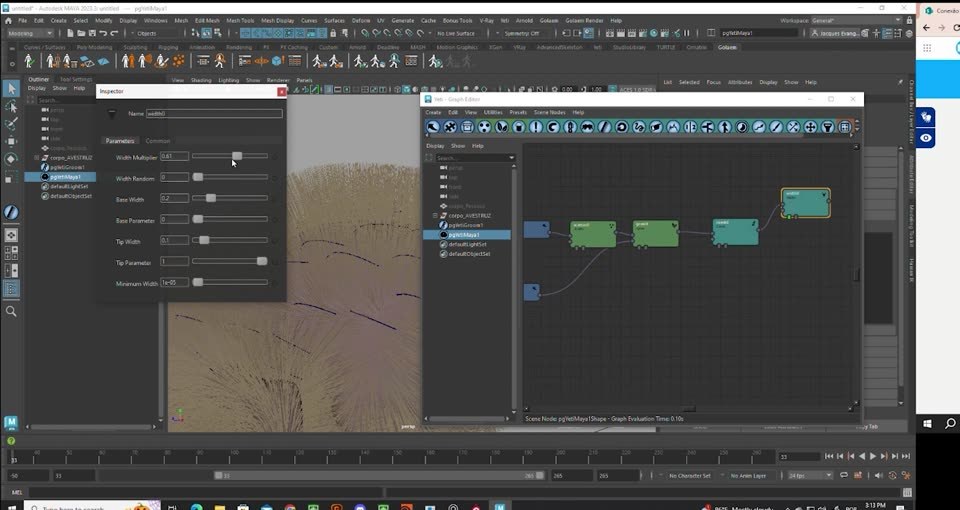
Feather dynamics required layer-by-layer testing and adjustments to guide behavior. Once validated, the simulation was cached for predictable rendering. In documented tests, caching approximately 300 frames took 30 to 45 minutes.
Groom adjustments across different body regions05 / LOOK DEVELOPMENT
Materials, lighting and rendering.
For look development, I chose Arnold and the Standard Hair shader to refine how the fibers responded to light, including curve shading, roughness and render sampling.
Shader development and lookdev06 / PIPELINE
Production-ready.
The groom was developed against a reference Alembic sequence to simplify testing and integration with animation. The workflow also required coordination with the render farm to ensure machines had the necessary licenses.
Procedural feather node graph
04 / MACAW
THE MACAW.
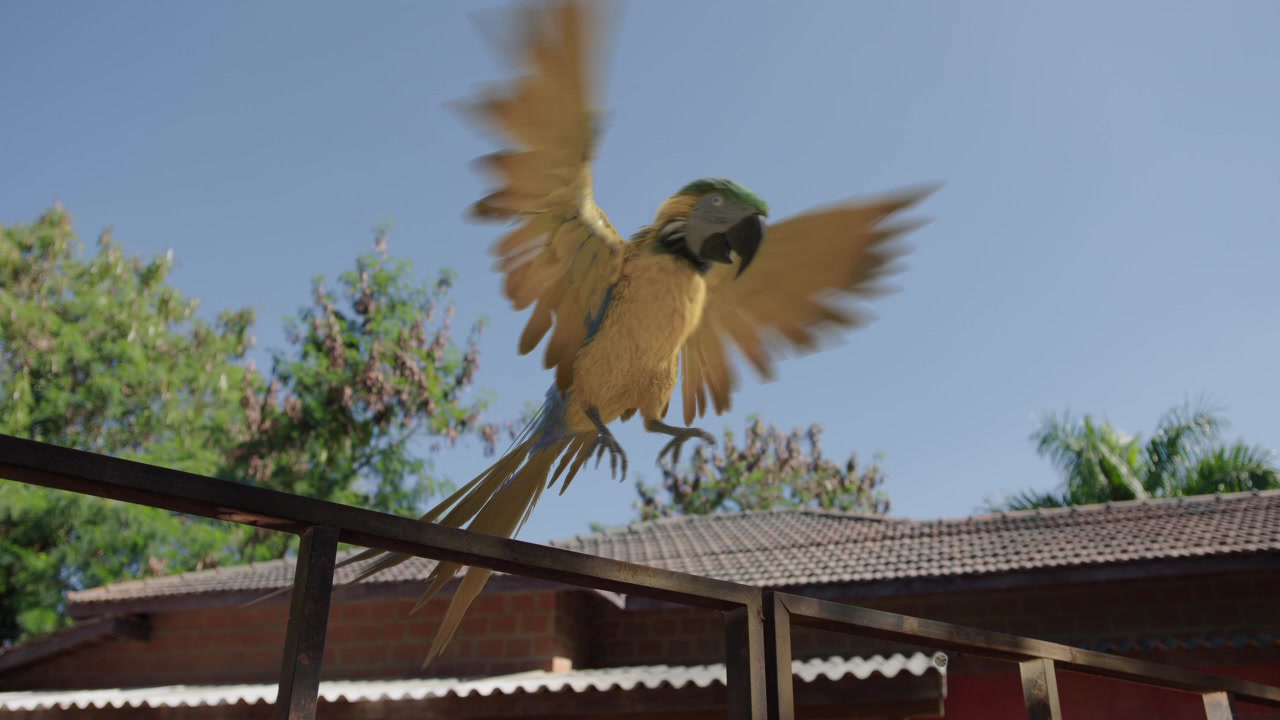
Another digital animal developed for Pablo e Luizão, following the same core pipeline as the ostrich.
Same pipeline, a different challenge
For the macaw, my contribution covered the complete asset, rigging with Advanced Skeleton, Yeti feather grooming and rendering. As with the ostrich, the animation was handled by another artist. My work focused on preparing the character for the animation and rendering pipeline.
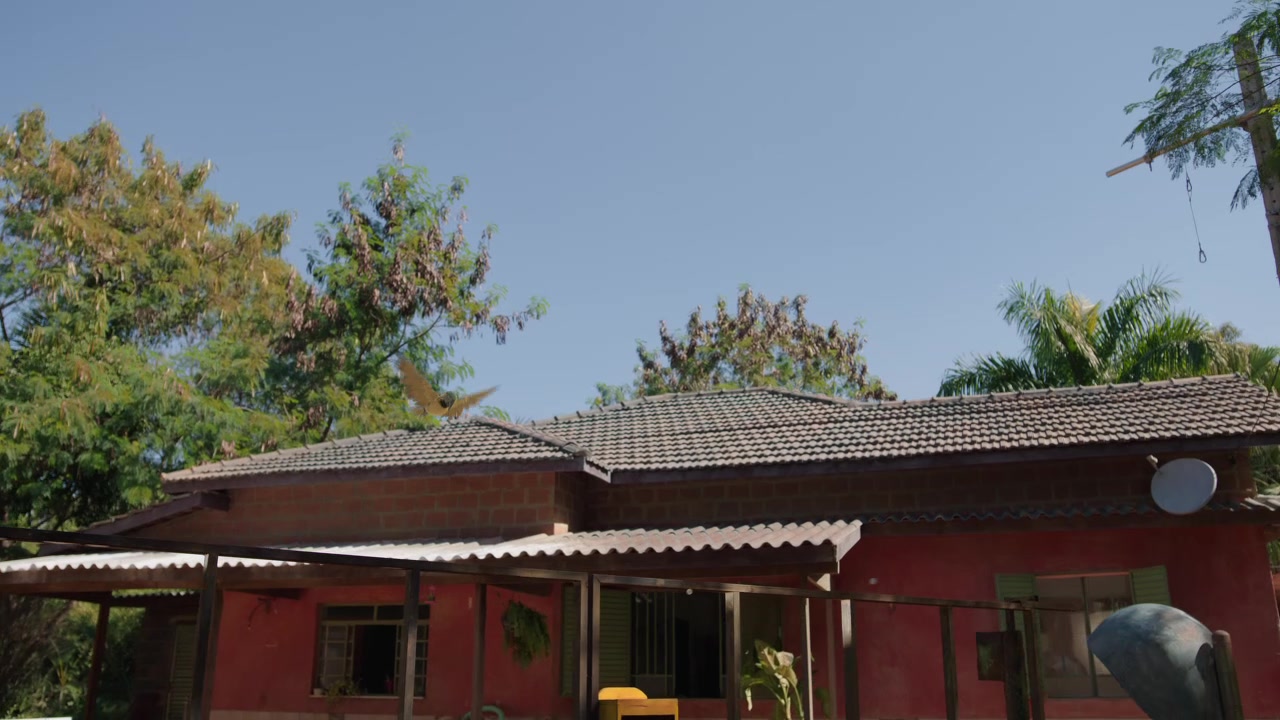
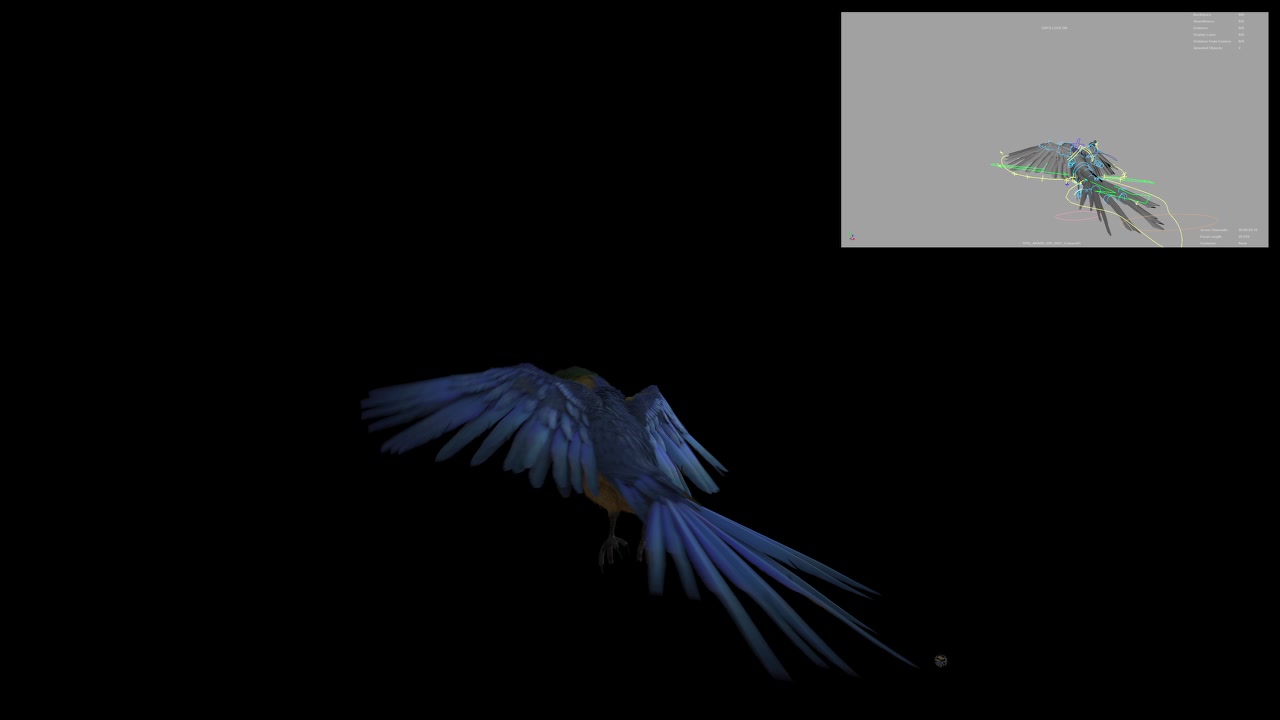
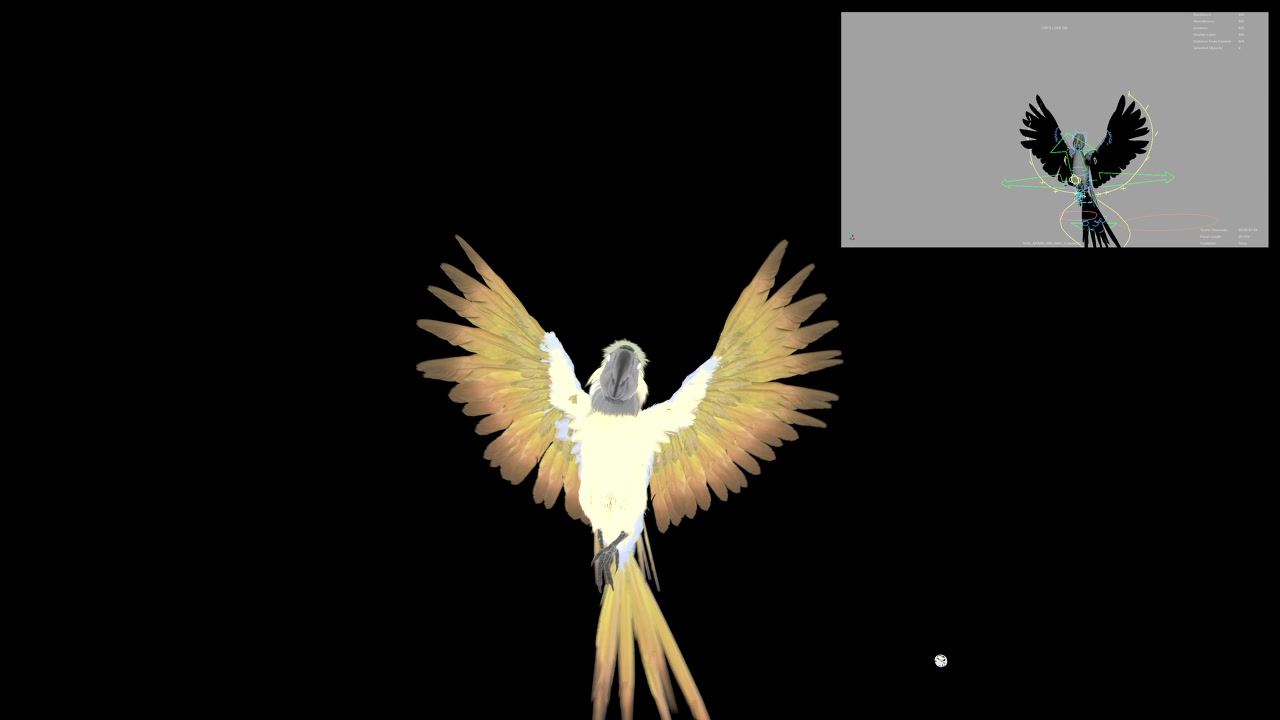
The breakdown includes shots of the creature in context and production images showing rig preparation and rendered feather work.
MACAW BREAKDOWN • ASSET / RIG / GROOM / RENDER • ANIMATION BY ANOTHER ARTIST
01 / ASSET MODELING
Building the bird.
The macaw asset was developed for live-action shots, with a readable silhouette, controlled proportions and preparation for the rest of the Creature VFX pipeline.
Macaw asset during development02 / RIGGING
Ready for animation.
The rig was built with Advanced Skeleton, following the same efficient and flexible approach used on the ostrich. The goal was to deliver a functional setup for the rest of the production.
Setup ready for shot integration03 / YETI GROOM
Feathers with shape and volume.
The feather system was developed in Yeti, focusing on orientation, distribution and clear wing and tail silhouettes — essential to the macaw’s appearance in flight.
Feather definition and wing / tail volume04 / RENDER
Final asset presentation.
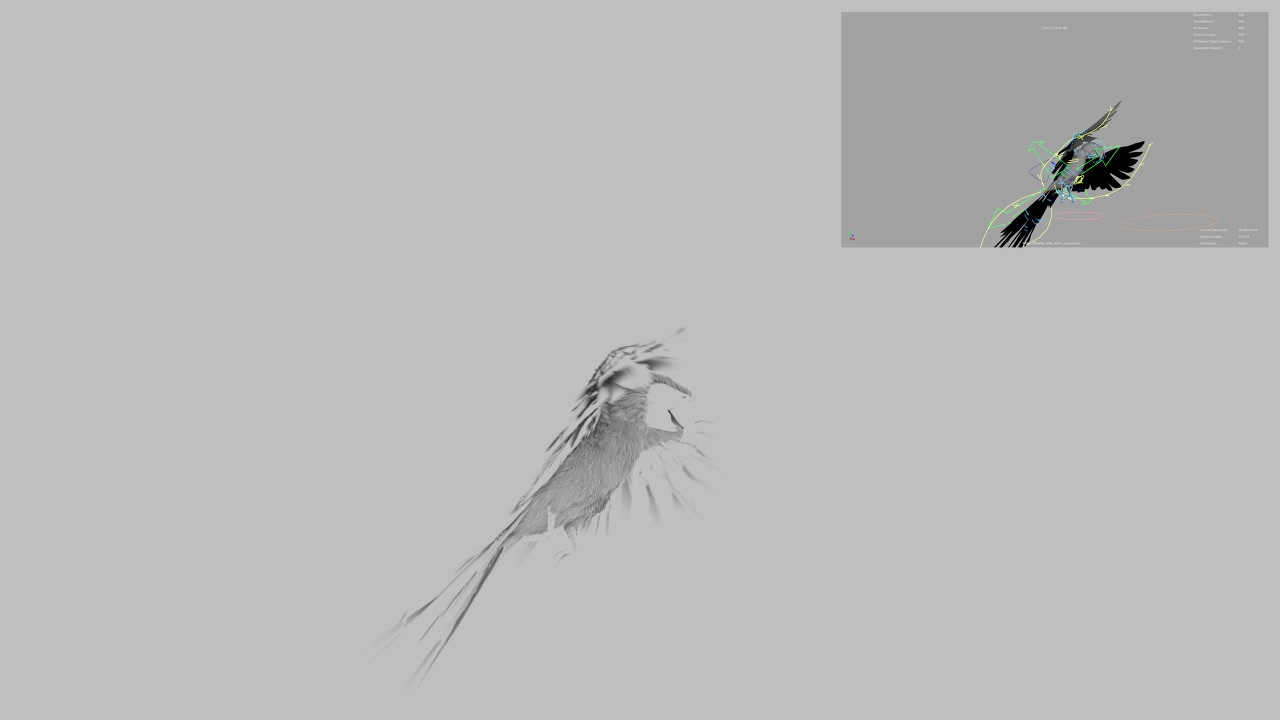
The final render was developed to highlight the macaw’s colors, feather structure and silhouette. The supplied material shows the creature ready for shot integration.
Final rendered macaw
05 / PIPELINE TOOLS
TOOLS BEHIND THE FEATHERS.
Two tools were fundamental to turning the purchased model into a production-ready creature: Advanced Skeleton for rigging and Yeti for procedural feather grooming.
RIGGING / AUTODESK MAYA
ADVANCED SKELETON.
The original rig lacked the flexibility we needed. I rebuilt the character rig in Maya with Advanced Skeleton, which speeds up complex rig development using an adjustable underlying structure.
This approach was particularly important on a tight schedule: I delivered an optimized, animation-ready model and rig to the animator, with enough flexibility to accommodate adjustments to individual shots. The original feather cards were reused as proxies for animation tests. Animation was handled by another artist.
Original production documentation: rig structure in Maya using Advanced Skeleton.
PROCEDURAL FEATHER GROOMING / YETI 4.2
YETI & NODE GRAPH.
The key challenge was replacing feather cards with a procedural groom offering control over orientation, density, shape and dynamics. I chose Yeti 4.2 for its balance of quality and production efficiency after evaluating other options.
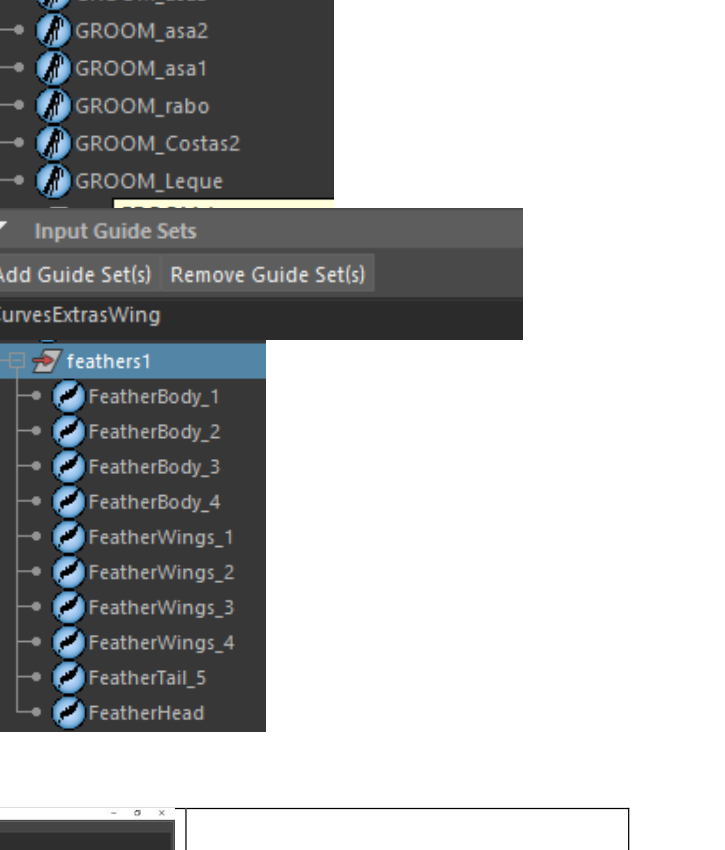
O Graph Editor was essential: the node-based structure made it possible to organize and adjust each part of the system without relying on one monolithic setup. I separated grooms into regions — head, body, wings, tail, crest and eyelashes — and used guides, density maps and painted attributes to control feather direction.
Two UV sets: 4K/UDIM textures and groom control maps.
Independent layers and densities for each region.
Different feather models and guides for challenging areas.
Dynamics tested progressively by layer before caching.
Yeti Graph Editor: screenshot from the original production documentation (page 5), showing the actual node network used for this project.Feather structures and models organized into grooms and guide sets.
06 / TECHNICAL NOTES
WHAT I LEARNED.
The key was not a single tool, but how the system was organized: attributes, layers, caching and controlled tests.
Two UV sets with different purposes
One UV set for 4K UDIM textures; a second, simplified set for density and groom control maps.
Region-based grooming
Separating regions and their density maps made it possible to adjust feather behavior without affecting the entire system.
Orientation and variation
Attribute maps, guides and different feather models helped avoid artificial patterns and correct feather direction.
Progressive dynamics testing
Starting with low values, isolating layers and checking animation in “Play every frame” mode helped stabilize the system.
Simulation and caching
After validating the guides, caches were saved and tested on shorter sections before processing the full sequence.
Render farm
Render nodes needed the appropriate licenses to load and render the Yeti groom correctly.
07 / PRODUCTION DETAILS
CREDITS & TOOLS.
Production
Pablo e Luizão / Globoplay
VFX Supervision
Thiago Anjos
VFX Artist / Creature Development
Jacques Evangelista
Modeling and sculpting
ZBrush
Rigging
Maya / Advanced Skeleton
Groom / Render
Yeti 4.2 / Arnold
This case study documents my role in developing digital animals for Pablo e Luizão. The ostrich chapter covers my work in asset optimization, animation-ready rigging, feather grooming, dynamics and rendering. I delivered the optimized ostrich model and rig to the animator. The macaw chapter focuses on my work in asset development, rigging, grooming and rendering. Neither creature was animated by me; animation was handled by other artists.